Original Image by Noah Freidman-Rudosky for the New York Times | Photo Composite

Lithium Salt Flats, Salar de Uyuni, Bolivia

Sunday, April 15, 2012

object

christine corday; protoist series
Christine Corday. UNE, 2008. 508 West 25th St. New York, New York.

a somatosensory experience ultimately allows the senses to inform identity or self with an unknown or an abstract. Forms of the PROTOIST series are prompts of this experience; not to be collapsed into or as "object" but rather as a relative, interconnected yet open marker of experience itself. object has been indoctrinated as an encounter of the term and meaning of "other", the Forms of the PROTOIST series explore dismantling this habitual, often sight-dominated, separateness-–to experiment informing one's self in the perpetual encounter of object without reinforcing other-ness but rather expanding the definition or object of "self." 
object, other, and self in quotations serve as abstractions from their known terms-–blurring their edges of distinction.

Friday, November 18, 2011

photo credit friedman rudovsky new york times; photo composite; une imagined site series
UNE Imagined Places, Lithium Salt Flats. 
Original Image: Friedman Rudovsky, New York Times
... i think to the colosseum, ziggurats, ancient arches, the pyramids and temples of every continent––when their edifice form lost its function, its ruin reveals its art. what remains is not seen but is a sensation, similar to how nerves that once serviced a missing part of the body still remain alive and well but without a function. the sensation from these ancient forms triggers a function of what it is to be human––and humanity's continual efforts to build or create something to replace or fill what is missing.

Art is not in the creating of a functionless form––rather, when all other structure and definition has failed, it is what persists.

when this persistence can be expressed in Form, only its sensation will demonstrate whether it serves to function humankind.

Saturday, October 15, 2011

do not be satisfied by the spectacle
the itchless scratch


Sunday, June 26, 2011

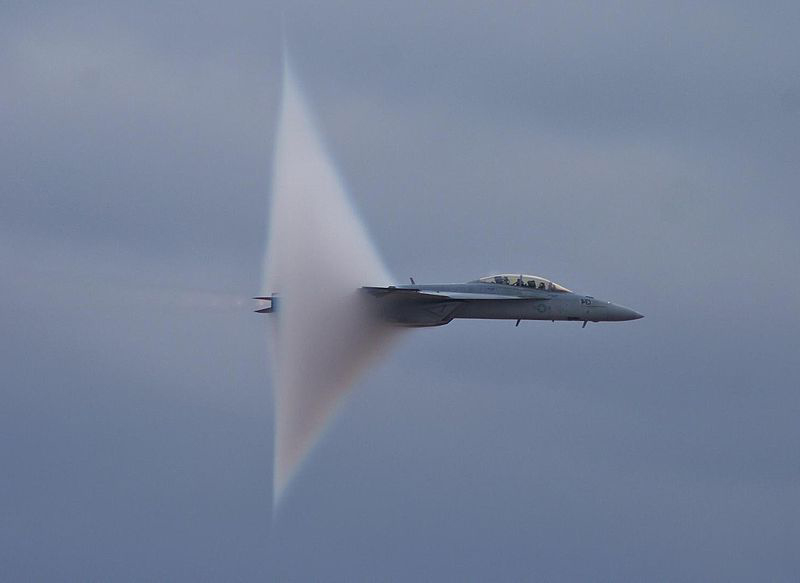
nearer still, prandtl-glauert singularity


photo credit: realbigtaco, file:FA-18 going transonic.jpg 2008

sometimes we needn't stir the senses through metaphor to inspire a reality beyond what we readily see; sometimes the physics or chemistry of what already is sheds another veil from what we see revealing an ever truer medium.
the moment with a work of Art should touch this mark; this is my science---an gedankenexperiment into Form through experiencing the question and answer of where we place our physical senses as reality.
the Abstract is an insistent realism pulling through the millennia layers of man's fiction; it's story is made known when a line of our fiction opens to the unknown. the Abstract is not an intangible, it is conceived as such only because we cast it outside the written wall of our experiential world. Art either punctuates the fiction or bares an experience of realized abstraction.

Tuesday, October 5, 2010

Der Blaue Reiter

“the art to come will give form to our scientific convictions. this art is our religion, our center of gravity, our truth. it will be profound enough and substantial enough to generate the greatest form, the greatest transformation the world has ever seen.” franz marc 1914


while living in my attic studio in sevilla spain, i came across a biography on wassily kandinsky. its author purported the story behind wassily's genesis of what the western world terms the beginning of modern art. after a day of landscape painting, he returned to his studio laying his canvases against the walls to dry. upon entering the studio the next morning, he struggled to recognize one of his canvases because it was oriented sideways (maybe even upside down). it was the nature of the abstract's immediacy, the inner necessity of this moment that began an intuitive, spiritually and scientifically symbolic series of works which thoughtfully developed into what later credits him as the father of western modern abstraction.


if the picture of reality shifted perpendicular to your line of sight, if all the forms you know as reality shifted even a little, all forms then become a choice again in how you assign them meaning. it is this momentary lapse of the conditioned into the permission of the conscious choice that brings the true art of creation as a filter ever-present within our collective/individuated thought processes and conception of what is.


Saturday, August 28, 2010

What Time Is Is?

" A particular moment can no more change in time than a particular location can move in space: if the location were to move, it would be a different location in space; if a moment were to change, it would be a different moment in time. The intuitive image of the projection light that brings each new now to life just doesn't hold up to careful examination. Instead, every moment is illuminated, and every moment remains illuminated. Every moment is." - brian greene

that every moment is----is not as zen as it may sound but nonetheless challenges the intuitive feel of time indoctrinated to or through the current parameters of our human senses. time as understood through relativity is simply the manner you slice the experience of spacial dimension via your particular position of rest or acceleration---always however relative to another's. this does not place time as an independent-like existence within the fabric of reality; but rather that past, present, future becomes more as one's angle of perceptual experience, if you will, within one existent whole of "time" than some linear locomotive---time in this definition is only a relative framework of reference.

although entropy, the second law of thermodynamics, can provide an observable direction for time---our theoretical and experimental understanding of spacetime, leaves space and time in peculiar postures---possibly no different as an evolution of the universe than you and me.

Wednesday, August 11, 2010

"...seeing is an active process" - frank wilczek

Saturday, May 29, 2010

Single System Verses

you cannot separate yourself from what you observe

Wednesday, May 26, 2010

The Tight Bud of Openness,
(a subtle shift in a closed system)

"There are times in science when progress can only be made by revolutionary ideas" Nobelprize.org

If matter is never truly created or destroyed, just as its equivalent, energy, but merely changes or re-arranges form from one state to another––any state of matter then is transformation, a transfer of information or potentia (as Aristotle termed it) and with this, what part does our sight and touch play as we are not simply witnesses to but inextricably "of" this––and yet the unaided human eye takes a seat at such a surface level of matter's seeming creation and destruction. Is this deeply ingrained Cartesian philosophical split of mind and matter? What do we "see" with our sense of sight? How is what we see the role of observer and participant in the state of matter? If sight is the resulting perception of visible light that reaches our eye but perhaps even more so the unconscious inference that requires well-known assumptions and patterns based on prior visual experience of the world––the conscious awareness of this and experiences with abstract unknowns can experiment with the resulting perceptions of sight and touch. Perhaps the human brain over the next millenia evolves our somatosensory and other neurological systems––in the meantime, our sense of "knowing" may be a tool into investigating the senses more fully––developing physical senses to the larger base reality of mass and energy––developing another awareness; this is the great opportunity of Art.


In the early spring of 2001, my use of paper, board or canvas as a choice in the immediate dispersal of an idea waned––the preparation of its substrate, a former ritual to the developing blueprint, grew to an almost full disregard of the "vehicleness" of the 2-dimensional plane. Accidental rips, stains, or eventual dissolvement/age of the 2D vehicle brought more intensity to the insistence of the idea at its 2D surface---further dimension(s) were needed. This was reinforced by a complete fascination with the paint itself and how it transformed into another image––every tool, every substrate felt all the more transitory.


The transition into Form, Sculpture was driven by the "existence" of the idea––what if anything is indestructible within any idea. If drawing a Form on paper, the stroke of the charcoal focuses on this––the destructible and the indestructible nature of Form. The stroke of this charcoal line then is similar to a momentary stroke of light in a darkened room.


One of the many reasons science enters my studio is its demand of a simple fundamental persistent openness, a budding thought and this is to remain open to the fact that measurements on the smallest elementary particle level do not bring completely objective results. This point can be as well argued as sustained however regardless of the ouroboros intellectualizing as to what is ever truly objective––this provocational thought reduced to its simplest seed renders one with a tiny mysterious openness and unknown which should be an extension to each of our physical human senses. This again is the great opportunity of Art.


A small openness that desires no answer other than remaining open to what determines what is––this pause in perception in the larger arenas of mass, like with Art, frees the addiction of collapsing all perception immediately into definition, into complete objectivity; again, this demands another awareness––a development of one's sense of the unknown.

Monday, April 19, 2010

Werner Heisenberg, Selections from Physics and Philosophy 1963

"Natural science, does not simply describe and explain nature; it is part of the interplay between nature and ourselves." –– "What we observe is not nature itself, but nature exposed to our method of questioning."
werner heisenberg